

Seed-Boss
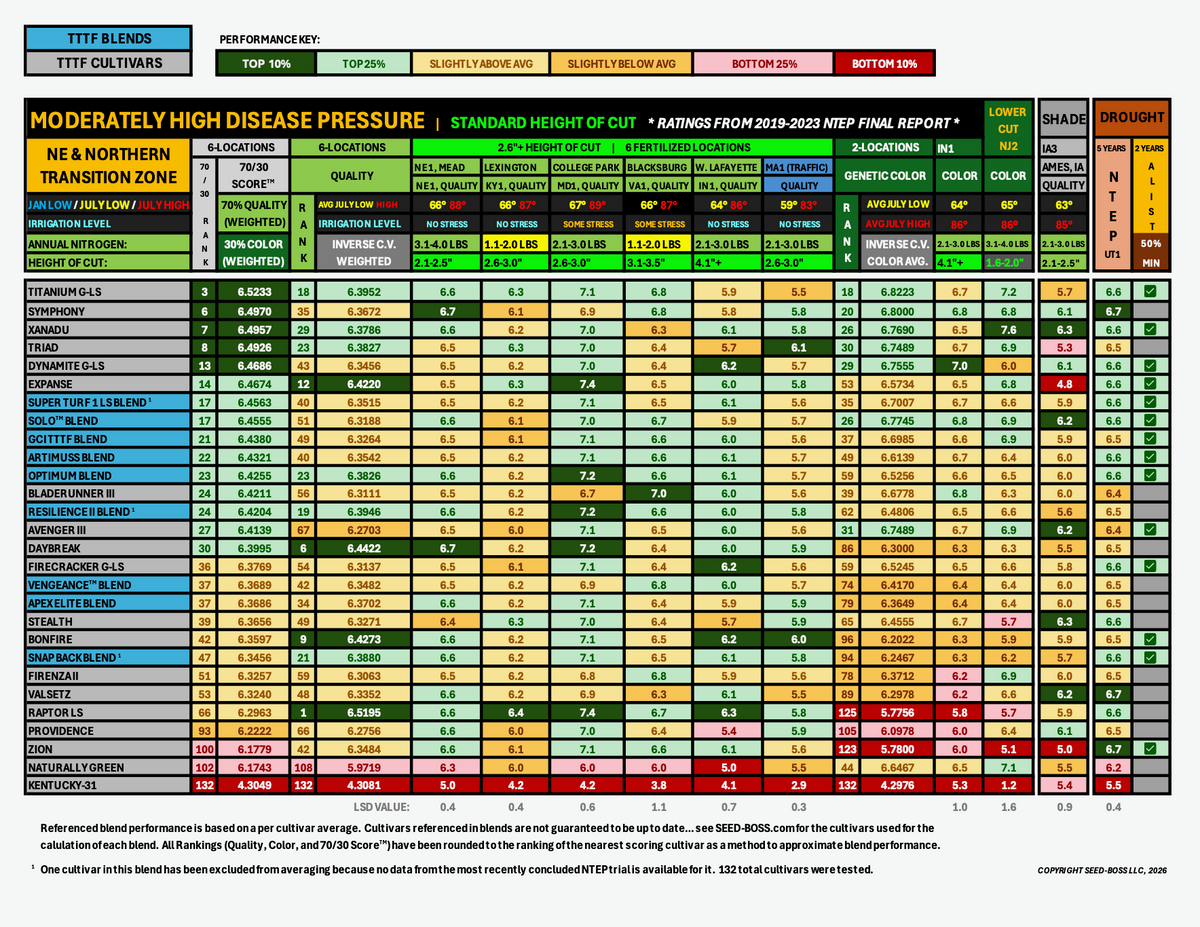
SOLO™ is a turf type tall fescue blend with cultivars selected specifically for superior shade performance but also superior full sun performance in the Pacific NW. #1 for Iowa shade testing. #1 for Pacific NW quality. #1 for Pacific NW color. (NTEP)
SOLO™ is a turf type tall fescue blend with cultivars selected specifically for superior shade performance but also superior full sun performance in the Pacific NW. #1 for Iowa shade testing. #1 for Pacific NW quality. #1 for Pacific NW color. (NTEP)
Couldn't load pickup availability
We consider tall fescue necessary in notable shade or anywhere that has average July lows above about 65°. To see the monthly temperatures of your city just google “(city name) climate” and average monthly highs and lows are typically available.
Recommended in highly shaded lawns such as properties surrounded by high trees (or trees with low-hanging branches like willows). Solo is the #1 performing TTTF blend in the Pacific NW and intentionally selected for superior shade performance as well (based on per cultivar averaging from the most recently concluded NTEP trial).
In lawns with adequate sun in the Pacific NW, perennial ryegrass offers nicer texture and often superior color, but Solo blend may look better overall and could even offer reduced poa pressure if much of the lawn has lots of shade. We prefer to keep lawns all one grass family, and especially avoid fine fescues whenever possible (examples of fine fescues include: chewings fescue, hard fescue, sheep fescue, strong creeping red fescue, & slender creeping red fescue).
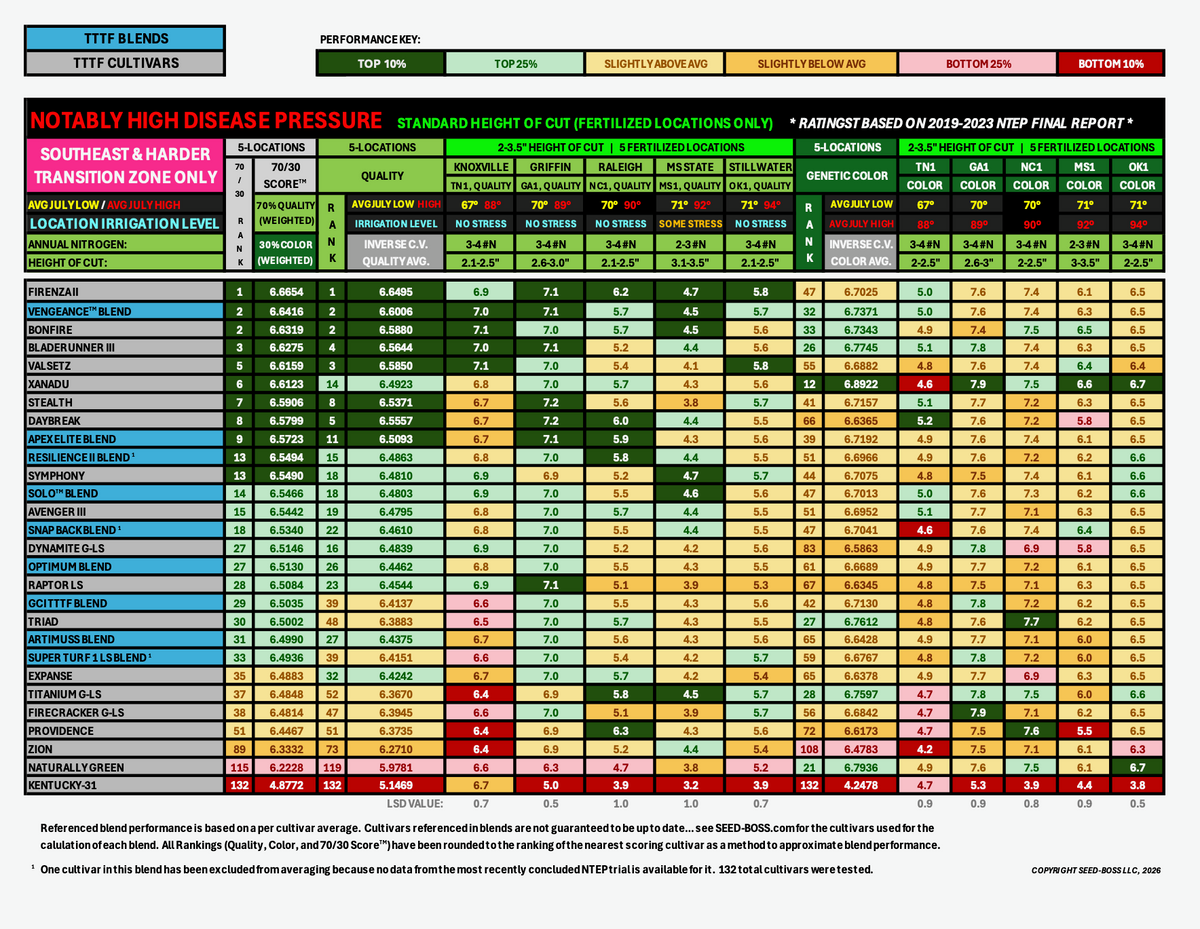
Turf type tall fescue has slightly superior drought performance to perennial ryegrass and requires approximately 50% less water than Kentucky Bluegrass to maintain acceptable turf quality after the first year of establishment (based on a 2” height of cut – see images). TTTF is considered to be a little easier than rye and offers superior summer disease performance (most relevant in the south). Ryegrass has a higher ceiling for turf quality and color typically and may be better suited to lawn enthusiasts in most northern climates in lawns with enough sunlight but TTTF should be the go to for lower light properties. In the Pacific NW, we generally recommend perennial ryegrass for most lawns and in much of the northeast we recommend high quality perennial ryegrass or KBG (with modest fungicide use as needed).
TTTF strengths: summer disease performance (especially relevant in the east), drought performance, shade performance, most dog urine tolerant of any cool-season grass family.
TTTF weaknesses: texture (including blade thickness), poor performance at lower cutting heights (most cultivars but not all), lower ceiling for turf quality vs. perennial ryegrass or Kentucky Bluegrass.